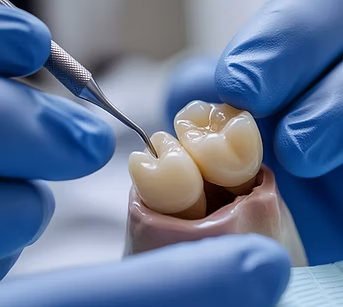
Dental implants are small titanium posts that a dental professional places in the jawbone to replace missing tooth roots. Once in position, each implant serves as a stable base for a crown, bridge, or denture. When several teeth are missing, you can place more than one implant at the same time. All-on-6 procedures use this approach to restore a full arch of teeth with six strategically positioned implants. Here’s information on All-on-6 implant procedures and why people may need them:
What Are All-on-6 Dental Implants?
All-on-6 dental implants replace a complete row of upper or lower teeth using six implants as anchors. Instead of placing one implant for each missing tooth, this method distributes support across six points along the arch. A custom bridge, also called a full-arch prosthesis, attaches to these implants to recreate the appearance and function of natural teeth. The six-implant layout spreads bite pressure evenly across the jaw. This balanced distribution gives the prosthesis a firm connection to the bone, resulting in a fixed set of teeth that stays in place during daily activities.
What Are Their Benefits?
Because the bridge attaches directly to the implants, it does not shift or require adhesives. This makes All-on-6 implant restorations a fixed alternative to removable dentures. Patients often find that a stable set of teeth makes eating and speaking more comfortable, and the design typically allows for cleaning much like natural teeth.
The added support from six implants can also help preserve jawbone structure over time, since implants transfer chewing forces into the surrounding bone. This may reduce the jawbone loss that often follows tooth loss. These restorations are often recommended for adults who have lost most or all of the teeth in one arch, or who need to have remaining teeth extracted. They may also suit people who have struggled with loose-fitting dentures and want a more secure option. A dental professional evaluates each case to confirm that the jawbone has enough density and volume to support the implants.
What Is the Process Like?
The dental implant process usually begins with an examination, imaging, and a review of your health history. This planning stage helps care teams map the position for each implant and design a prosthesis that fits your bite. In many cases, extractions and implant placement occur during the same visit, and a temporary bridge may be fitted after surgery.
After placement, the implants need time to integrate with the surrounding bone during a healing period called osseointegration. Once the dental team confirms that healing is complete, they attach the final, permanent bridge. For patients with a strong bite or those who want the most rigid foundation possible for their full-arch bridge, All-on-6 is often the recommended path.
The additional implant compared with four-implant options provides extra anchor points, which can help the prosthesis withstand heavier chewing forces. A secure restoration can make it easier to chew a wider range of foods, and improved chewing may support better nutrition. By restoring the ability to bite and speak clearly, this approach can improve daily oral function and overall health.
Learn More About Dental Implants
All-on-6 dental implant restorations offer one path to replacing a full arch of missing teeth with a fixed, stable solution. The appropriate restoration option depends on your jawbone condition, your bite, and your personal goals. If you need a full-arch restoration, schedule a consultation to determine which treatment can support your oral health. A dental provider can review your health history, examine your mouth, and explain which approaches may be appropriate for you.
- Methods for Youthful Skin Rejuvenation
- Functional Health and Its Role in Preventive Care
- Navigating Hormonal Changes and Wellness During Menopause
- Exploring Non-Invasive Treatments for Nerve Pain
- The Role of Dental Exams in Early Detection of Oral Diseases