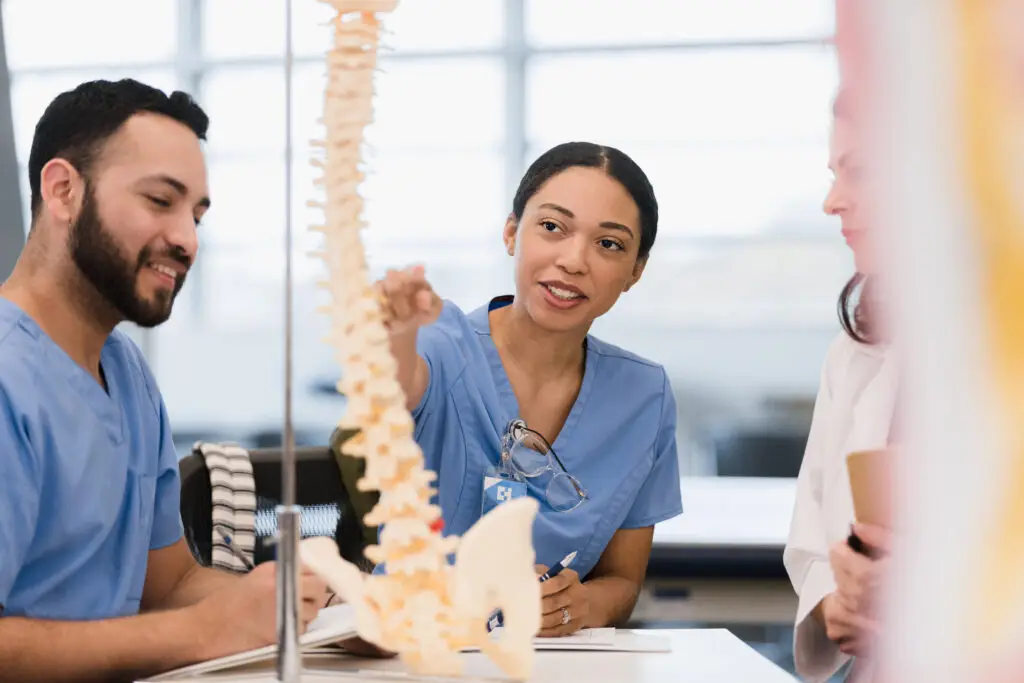
Disc replacement surgery is a procedure that removes a damaged spinal disc and inserts an artificial device in its place. The damaged disc is taken out by the surgical team, and the device takes over its role between the vertebrae. Because the spine carries daily loads and bends through many positions, the artificial disc aims to copy natural movement patterns. Long-term results from this procedure depend on patient health, disc location, and surgical technique.
Mobility Preservation
The artificial disc placed during disc replacement surgery allows the spine to bend and twist, and it keeps the treated segment from fusing. Range of motion is measured in long-term studies, and those measurements often track the joint over many years. Although the device cannot restore a perfectly natural spine, it maintains a degree of flexibility that fusion procedures do not allow. Patients who keep moving after the surgery tend to report steadier function in nearby segments.
Movement at the treated joint also affects the discs above and below it. The neighboring segments take on less extra strain when the treated level still bends, so the spine distributes force more evenly. Surgeons monitor this balance during follow-up visits because uneven loading can speed up wear in other areas. A spine that shares movement across several levels often ages with fewer mechanical problems.
Potential Reoperation
Reoperation remains a possible long-term outcome, and surgeons track its frequency across large patient groups. A second procedure may be needed when a device shifts, wears, or sits beside a segment that later weakens. Although reoperation rates differ between patients, the chance of a second surgery is low. The location of the replacement influences the rate of secondary surgeries. The chance of a repeat surgery rises with age, activity level, and the condition of nearby discs.
Low Risk of Degeneration
Degeneration of segments next to a treated disc is lower than with other spine surgery styles. The treated area acts similar to a natural disc, and this reduces the extra stress placed on the discs around it. Comparing disc replacement with fusion usually shows a lower rate of nearby degeneration in the replacement group, since fusion locks one segment and shifts more force to its neighbors. Lower stress on surrounding tissue results in slower wear over time.
The material of the artificial disc also plays a part in how the segment ages. Modern devices use metal and plastic parts that resist breakdown, and these materials hold their shape under repeated loading. Implants are usually not able to last forever, but the slow rate of wear in current designs supports long-term spinal stability. A stable device helps the surrounding bone and soft tissue settle into a steady pattern.
Patient habits shape these outcomes as much as the device itself. Regular movement, healthy weight, and good posture lower the strain on every spinal level, and these factors work together over many years. People who follow their surgeon’s guidance often see slower changes in the discs that surround the implant. The combination of a durable device and steady habits forms the base of a lasting result.
Learn More About Disc Replacement Surgery
Disc replacement surgery is usually an option recommended for people who have spinal damage that cannot heal on its own. This often preserves mobility, and that does not occur for many other surgical methods. If this treatment method interests you, contact a spinal health clinic to schedule a consultation.
- Methods for Youthful Skin Rejuvenation
- Functional Health and Its Role in Preventive Care
- Navigating Hormonal Changes and Wellness During Menopause
- Exploring Non-Invasive Treatments for Nerve Pain
- The Role of Dental Exams in Early Detection of Oral Diseases