Non-healing foot wounds require careful attention, and podiatrists have the specialized training to provide it. Because they focus on foot and ankle health, these providers manage lower-extremity wounds through a structured, hands-on approach. Here’s information on what a podiatrist does during the wound care process:
Assessing the Wound
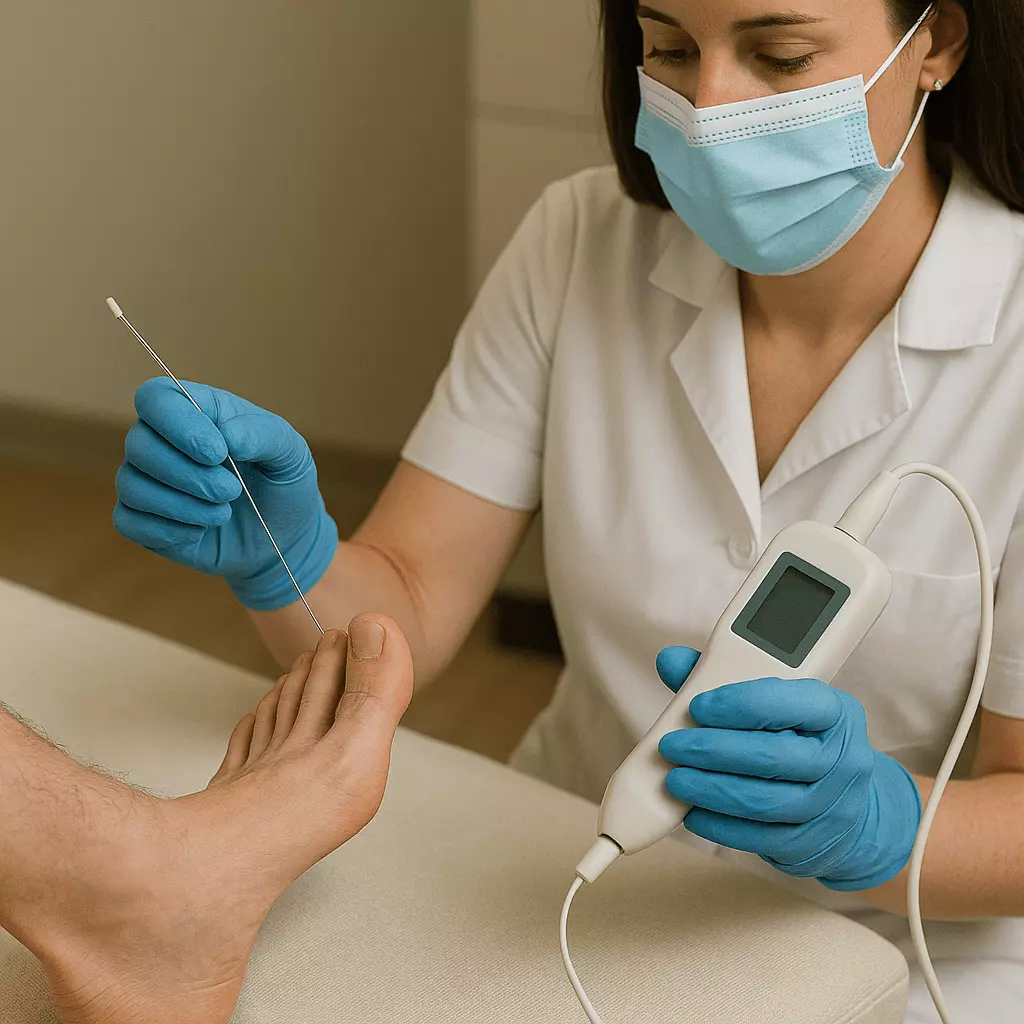
When initiating wound care, podiatrists complete a comprehensive assessment and use it to guide subsequent decisions. During the evaluation, they examine the wound’s size, depth, and location, as well as the surrounding skin; the condition of nearby tissue can significantly influence the care plan. A podiatrist also reviews your medical history and evaluates factors such as circulation and sensation in your feet; this helps create a more complete picture of your overall health. Since wounds can change as they heal, regular reassessments are a key part of the process. A treatment plan that was appropriate one week sometimes requires adjustments the next. When a pressure wound is present, podiatrists may assign a stage from one to four to describe its severity and guide ongoing care.
Addressing the Damaged Tissue
Debridement, the removal of dead or damaged tissue, keeps a wound clean and supports the conditions needed for healing. Podiatrists perform this carefully, using specialized tools and proven techniques in a clinical setting. Because every wound differs, they select the method that suits the specific case, and they explain the reasoning behind that approach. This key component of professional wound management helps prepare the wound for the next stages of care.
The right dressing plays a significant role in the healing process. Podiatrists may choose one based on the wound’s specific characteristics, including moisture levels and the amount of drainage present. They also provide instructions on how often a dressing should be changed and how to keep the area clean between appointments. When these guidelines are followed consistently, the appropriate dressing helps maintain a stable wound environment while protecting the area from external contaminants.
Reducing Pressure and Monitoring Regularly
Pressure on a wound interferes with healing, especially when it is on the bottom of the foot. Offloading reduces or removes that pressure, and it forms a key part of podiatric wound care. Podiatrists can utilize several tools to achieve it, including:
- Custom orthotics or insoles
- Special footwear or boots
- Padding and felt
- Casts designed to redistribute weight
By easing pressure off the affected area, these methods give the wound a better chance to recover. Monitoring continues across multiple visits. Podiatrists schedule follow-ups to track progress, and at each visit, they reassess the wound, provide any necessary treatment, and update their recommendations. This consistent oversight helps detect changes early and keeps the plan on track.
Find a Qualified Podiatrist
Podiatrists provide a structured, hands-on approach to wound care for the feet and lower limbs. From assessment and debridement to dressing selection and offloading, they cover the practical steps involved in managing foot wounds. These professionals can also offer guidance on footwear, daily foot checks, and habits that support overall foot health; this enables you to take an active, informed role in your recovery. If you have a wound on your foot, contact a podiatrist for an assessment.
- Methods for Youthful Skin Rejuvenation
- Functional Health and Its Role in Preventive Care
- Navigating Hormonal Changes and Wellness During Menopause
- Exploring Non-Invasive Treatments for Nerve Pain
- The Role of Dental Exams in Early Detection of Oral Diseases